
In today’s fast-paced business world, we can’t underestimate the importance of solid financial management. From managing QuickBooks for small businesses to preparing financial statements, the role of a bookkeeper is crucial in maintaining financial health and driving informed decision-making.
We’ll explore the key benefits of professional bookkeeping and how it enhances business operations. We’ll also discuss the vital aspects of financial planning, tax preparation, and payroll management that contribute to a company’s growth. Whether you’re a small business owner or part of a larger organization, understanding the value of expert bookkeeping services is essential to navigate the complex financial landscape and set your business up for long-term success.
The Role of Accounting in Business Success
As a professional freelance bookkeeper, I’ve seen firsthand how accounting plays a crucial role in driving business success. It’s the backbone of any thriving enterprise, providing essential insights that guide decision-making and ensure financial health. Let’s explore the key aspects of accounting that contribute to business success.
Financial Record Keeping
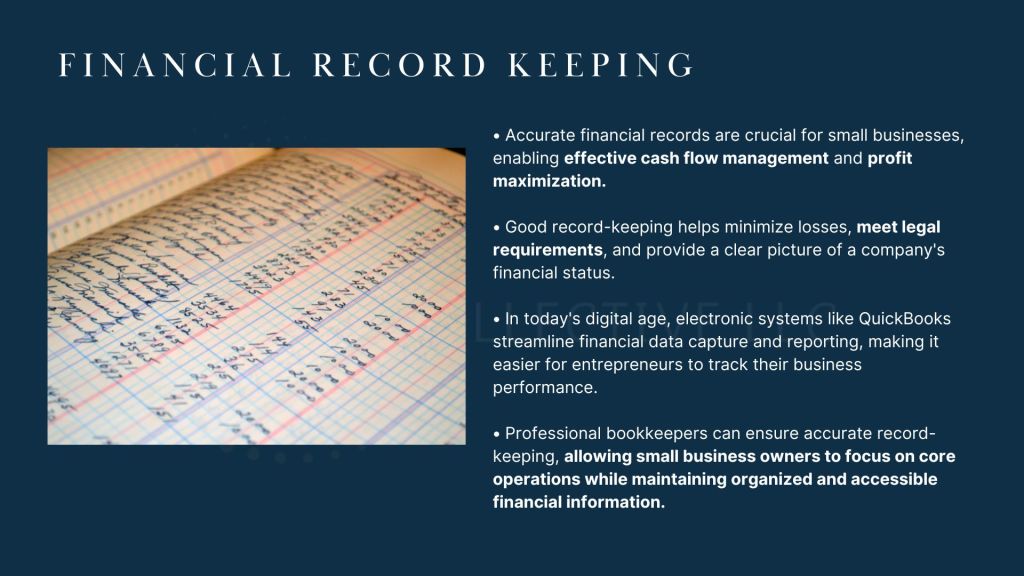
Accurate and up-to-date financial records are vital for any business to thrive. Good record keeping helps us minimize losses, manage cash flow effectively, and meet legal and regulatory requirements. We use these records to protect our business, measure performance, and maximize profits. In today’s digital age, electronic record-keeping systems, such as accounting software, make it easier to capture information and generate reports.
As a professional bookkeeper, I can help manage a small business’s QuickBooks, ensuring that all financial data is accurately recorded and easily accessible. This level of organization not only streamlines day-to-day operations but also provides a clear picture of the company’s financial status.
Decision Making Support
Accounting serves as a powerful tool for informed decision-making. By providing a comprehensive view of a company’s financial landscape, it allows business owners and managers to make choices with clarity and confidence. We use historical financial data to create realistic budgets, which serve as a roadmap for resource allocation and future planning.
With proper accounting practices, we can:
- Analyze departmental, product, or project performance
- Control costs and make informed cost-cutting decisions
- Evaluate the feasibility and risks of long-term strategic decisions, such as expansion or mergers
As your bookkeeper, I can help you interpret these financial insights, enabling you to make data-driven decisions that steer your business toward sustainable success.
Regulatory Compliance
Compliance with regulations and laws is a critical aspect of running a successful business. Proper accounting practices ensure that we meet our obligations to local, state, and federal taxing authorities. This includes:
- Filing timely monthly, quarterly, and annual tax returns
- Managing payroll taxes, including employee withholdings and company shares
- Handling state and local sales taxes
- Maintaining necessary licenses and fees
By staying compliant, we not only avoid potential penalties but also build a good reputation that can attract more clients or customers. As your professional bookkeeper, I can help ensure that your business meets all these regulatory requirements, giving you peace of mind to focus on growing your enterprise.
In conclusion, accounting is not just about numbers; it’s about providing a clear, comprehensive view of your business’s financial health. By maintaining accurate records, supporting informed decision-making, and ensuring regulatory compliance, accounting plays an indispensable role in driving business success. As a professional freelance bookkeeper with expertise in QuickBooks, I’m here to help your small business navigate these financial complexities and set the stage for long-term growth and prosperity.
Key Benefits of Professional Bookkeeping
As a professional freelance bookkeeper, I’ve seen firsthand how proper bookkeeping can transform a business’s financial management. Let’s explore the key benefits that professional bookkeeping services bring to the table.
Accurate Financial Reporting
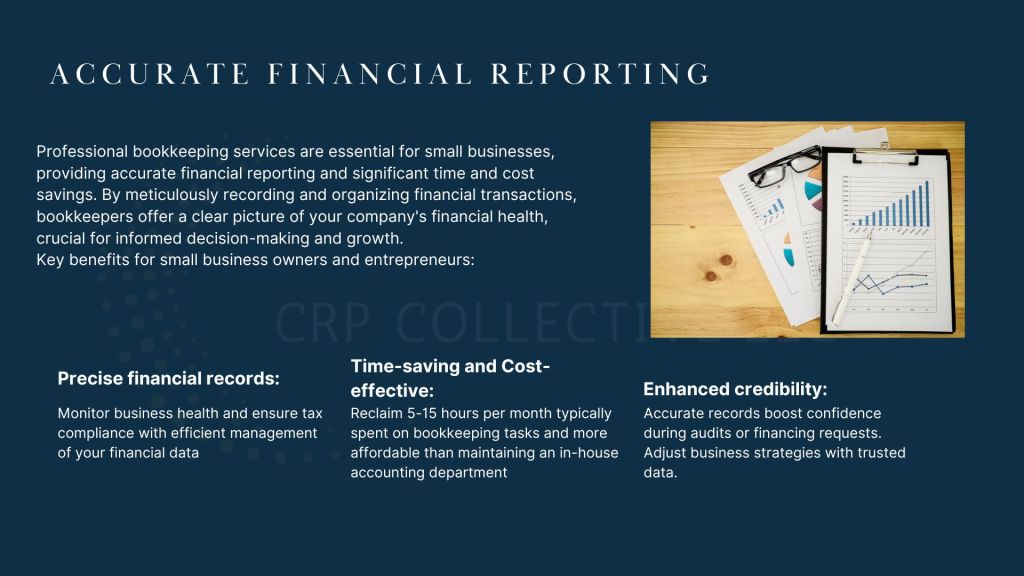
Accurate financial records are the cornerstone of a successful business. Professional bookkeepers meticulously record, organize, and manage a company’s financial transactions. This includes tracking income and expenses, reconciling bank statements, and ensuring compliance with tax regulations. By maintaining precise records, we provide a clear and current picture of your company’s financial status.
The importance of accurate financial records cannot be overstated. They allow us to:
- Monitor your business’s financial health
- Track cash flow effectively
- Identify areas for cost savings
- Ensure compliance with tax regulations
Moreover, accurate records are invaluable during audits or when seeking financing, as they reassure potential investors and lenders.
Time and Cost Savings
One of the most significant advantages of professional bookkeeping is the time and cost savings it offers. Small business owners often spend an average of 5-15 hours per month on bookkeeping tasks. By outsourcing these responsibilities to experts like myself, you can reclaim that valuable time and focus on growing your business.
Professional bookkeepers utilize advanced software that automates many data entry and processing tasks. This automation not only saves time but also reduces the risk of human error. For instance, I can help manage your small business’s QuickBooks, ensuring all financial data is accurately recorded and easily accessible.
Additionally, outsourcing bookkeeping services can be more cost-effective than maintaining an in-house accounting department. It eliminates overhead costs such as salaries, benefits, and office space. Many bookkeeping service providers offer scalable pricing models, allowing you to adjust service levels according to your needs and budget.
Improved Cash Flow Management
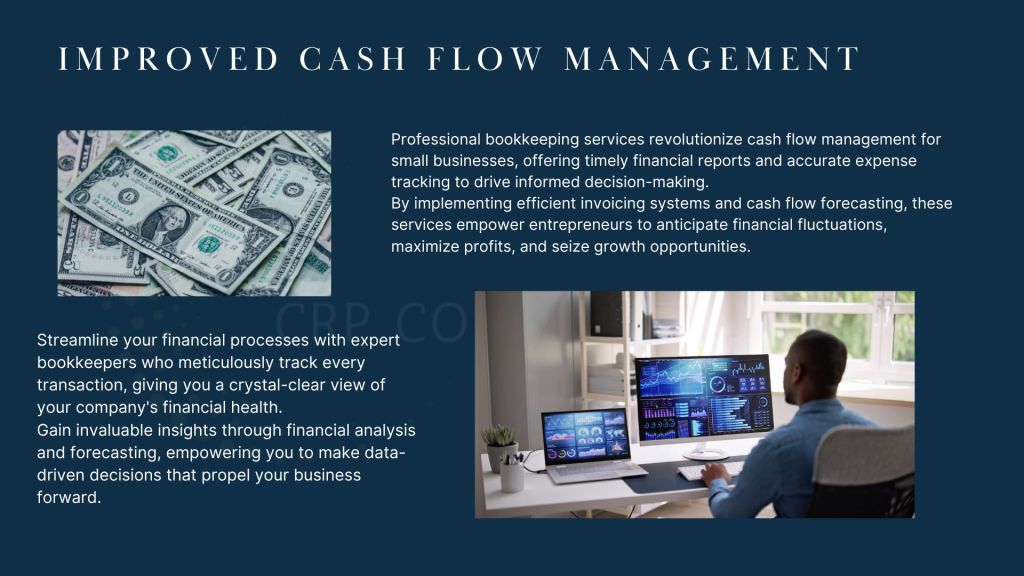
Effective cash flow management is crucial for business success, and professional bookkeeping plays a vital role in this area. We provide timely and accurate financial reports, enabling you to make informed decisions based on up-to-date information.
Here’s how professional bookkeeping enhances cash flow management:
- Efficient expense tracking: We categorize and organize expenses systematically, helping you identify areas for cost savings.
- Cash flow forecasting: Using past data, we can predict future cash inflows and outflows, helping you anticipate and prepare for potential cash shortages or surpluses.
- Timely invoicing and collections: We ensure invoices are issued promptly and follow up on overdue payments, maintaining a steady cash flow.
By providing these insights, we help you maintain financial stability and make strategic decisions about investments and funding.
As your professional bookkeeper, I can help manage your small business’s QuickBooks and provide these valuable services. With accurate financial reporting, significant time and cost savings, and improved cash flow management, professional bookkeeping sets the stage for your business’s long-term success and growth.
How Bookkeepers Enhance Business Operations
As a professional freelance bookkeeper, I’ve seen firsthand how our services can significantly enhance business operations. We play a crucial role in streamlining financial processes, assisting with tax preparation and planning, and providing valuable financial analysis and forecasting. Let’s explore these key areas in detail.
Streamlined Financial Processes
One of the primary ways we enhance business operations is by streamlining financial processes. We’re responsible for recording every financial transaction into the accounting system, including earnings, outlays, payments, and acquisitions. This meticulous tracking allows us to provide a clear picture of your company’s financial status.
We also assist in managing cash flow, which is crucial for business stability. By developing a cash flow forecast that includes monthly and quarterly predictions of revenue and expenses, we help ensure that your company has adequate money to cover its financial responsibilities and needs.
Another critical task we perform is bank reconciliation. This process involves matching bank statements against internal financial records, helping to identify any errors in the books that can occur due to forgotten invoices, cash transactions, or calculation mistakes. It’s also an essential step in detecting potential fraudulent activities.
For small businesses, I can help manage QuickBooks, ensuring all financial data is accurately recorded and easily accessible. This level of organization not only streamlines day-to-day operations but also provides a clear picture of the company’s financial status.
Tax Preparation and Planning
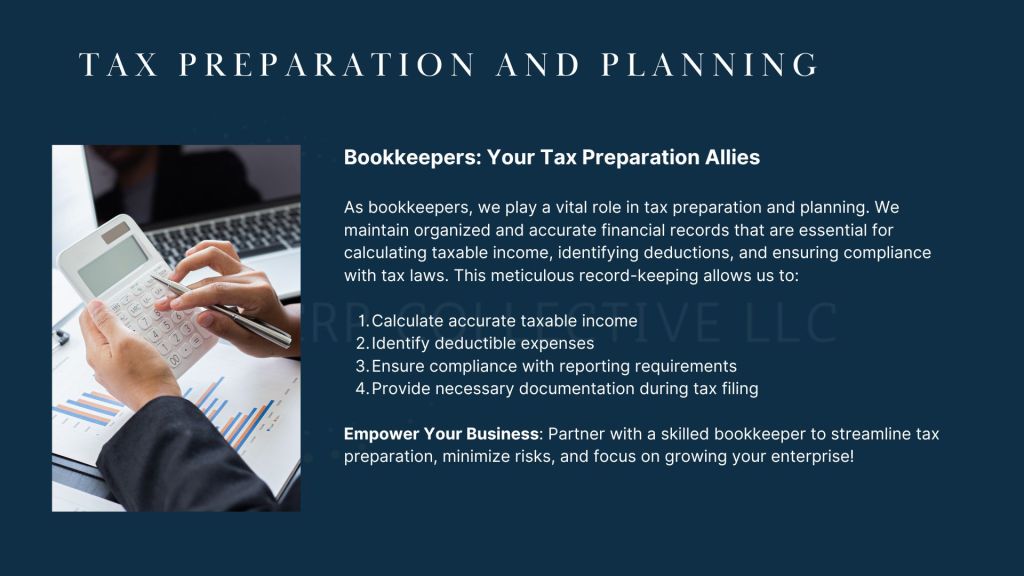
As bookkeepers, we play a vital role in tax preparation and planning. We maintain organized and accurate financial records that are essential for calculating taxable income, identifying deductions, and ensuring compliance with tax laws. This meticulous record-keeping allows us to:
- Calculate accurate taxable income
- Identify deductible expenses
- Ensure compliance with reporting requirements
- Provide necessary documentation during tax filing
By maintaining good bookkeeping practices, we help reduce the risk of penalties, fines, or audits resulting from inaccurate or incomplete records. We also assist in creating a tax plan, paying tax estimates according to the plan, and preparing both personal and business tax returns.
Financial Analysis and Forecasting
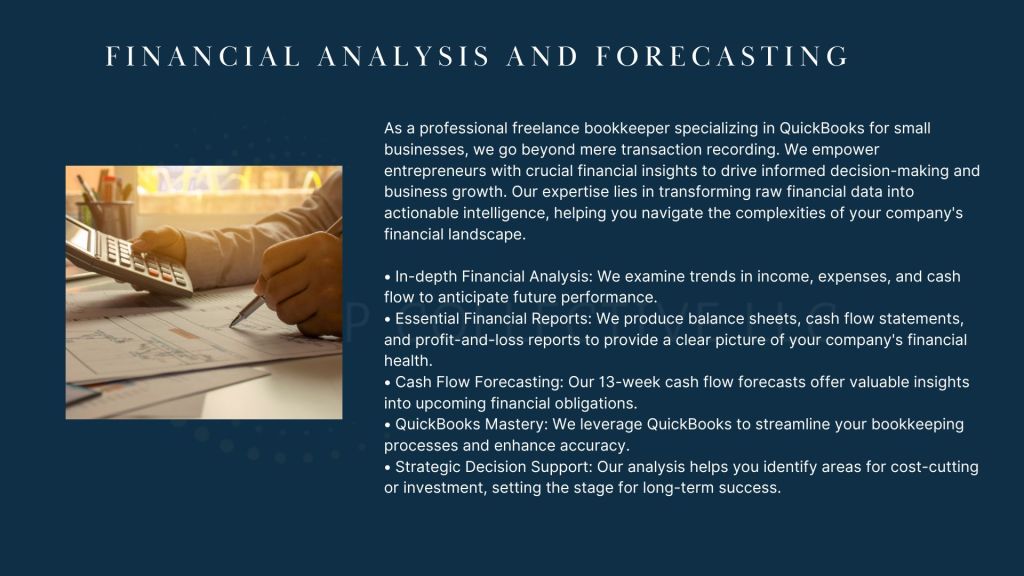
Our role extends beyond just recording transactions. We analyze financial data to help you better understand your company’s financial situation. This includes examining trends in income, expenses, and cash flow. Using this data, we can anticipate future financial performance, which aids in creating more informed budgets.
We assist in producing crucial financial reports, including:
- Balance sheets
- Cash flow statements
- Profit-and-loss statements
These reports provide invaluable insights into your company’s financial health, allowing you to make informed decisions about resource allocation and identify areas for potential cost-cutting or investment.
Moreover, we can help create a 13-week cash flow forecast, providing valuable insights into upcoming cash obligations. This short-term focus aligns well with our strengths in detailed and accurate transaction tracking.
By leveraging our expertise in these areas, we help enhance your business operations, providing you with the financial clarity and insights needed to make informed decisions and drive your business forward. As a professional freelance bookkeeper specializing in QuickBooks for small businesses, I’m here to help you navigate these financial complexities and set the stage for long-term growth and success.
Choosing the Right Bookkeeper for Your Business
As a professional freelance bookkeeper, I understand the importance of selecting the right financial expert for your business. When choosing a bookkeeper, there are several key factors to consider to ensure you find someone who can effectively manage your financial records and contribute to your business’s success.
Qualifications and Experience
When searching for a bookkeeper, it’s crucial to evaluate their qualifications and experience. A strong foundation in financial literacy and accounting principles is essential. Look for someone who has a thorough understanding of double-entry bookkeeping, general ledgers, accounts payable and receivable, and financial statement preparation.
Experience in the field is equally important. An experienced bookkeeper will have developed critical skills such as:
- Precision and analytical prowess
- Effective communication and client relations
- Time management and organization
- Problem-solving abilities
These skills enable bookkeepers to handle multiple tasks efficiently, interpret financial data accurately, and communicate complex financial information clearly to non-financial individuals.
Industry Expertise
When selecting a bookkeeper, consider their industry expertise. Different sectors have unique financial requirements and regulations. For instance:
- The oil and gas sector has specialized accounting rules for organizing expenses, oil reserves, and taxes.
- Manufacturing companies require bookkeepers who understand how to accurately recognize goods throughout the production process, including raw materials, work-in-progress, and finished goods.
A bookkeeper with experience in your specific industry will be better equipped to handle your financial needs and ensure compliance with relevant regulations. As a professional freelance bookkeeper, I can help manage a small business’s QuickBooks, tailoring my services to your industry’s specific requirements.
Technology Proficiency
In today’s digital age, technological proficiency is a critical skill for bookkeepers. When choosing a bookkeeper, consider their familiarity with:
- Accounting software such as QuickBooks, Xero, FreshBooks, Wave, and Sage 50 Accounting
- Spreadsheet programs like Microsoft Excel
- Database management systems
- Cloud-based technologies for real-time financial analysis
A technologically proficient bookkeeper can leverage automation tools to streamline financial processes, minimize manual errors, and provide real-time access to financial information. This not only improves efficiency but also enhances the accuracy of your financial records.
Moreover, with the increasing reliance on digital solutions, ensure that your chosen bookkeeper understands the importance of data security. Look for someone who is familiar with cloud-based bookkeeping systems that offer robust security measures to protect your sensitive financial information.
By carefully considering these factors – qualifications and experience, industry expertise, and technology proficiency – you can choose a bookkeeper who will not only maintain accurate financial records but also contribute valuable insights to your business’s financial health and growth. As a professional freelance bookkeeper specializing in QuickBooks for small businesses, I’m here to offer my expertise and help you navigate your financial landscape effectively.
Conclusion
Professional bookkeeping has a significant impact on a company’s financial health and decision-making processes. From keeping accurate records to providing valuable insights, bookkeepers play a crucial role in steering businesses towards success. As a professional freelance bookkeeper, I can help manage a small business’s QuickBooks, ensuring financial data is accurately recorded and easily accessible.
To sum up, choosing the right bookkeeper involves considering their qualifications, industry expertise, and tech skills. By partnering with a skilled bookkeeper, businesses can streamline their financial processes, improve cash flow management, and gain valuable insights for growth. This collaboration sets the stage for long-term success and allows business owners to focus on what they do best – running and growing their companies.
FAQs
What are the advantages of maintaining proper bookkeeping in accounting? Bookkeeping offers numerous advantages including detailed record-keeping, ensuring compliance with legal standards, simplifying planning, allowing for instant financial reporting, and enhancing relationships with banks and investors. It also aids in accurate tax forecasting, speeds up business response times, and facilitates quicker financial analysis.
Why is it crucial to have bookkeeping and accounting in a business? Bookkeeping is essential in business as it helps in creating budgets by providing a structured overview of income and expenses. This organized financial insight is crucial for making informed decisions, managing costs effectively, and allocating resources efficiently.
What makes professional accounting essential? Professional accounting is crucial because it involves the meticulous process of recording, reporting, and summarizing financial data within an organization. This is vital for ensuring regulatory compliance, making informed decisions, and maintaining financial transparency.
How do the roles of accounting differ from those of bookkeeping? Bookkeeping primarily focuses on the recording of financial transactions. In contrast, accounting extends beyond this to include the interpretation, classification, analysis, reporting, and summarization of financial data.

 The Balanced Ledger
Leave a comment